Make the next class easier to follow
Want to remember Jiu-Jitsu techniques after class without trying to memorize every movement? Start with one useful detail. A lesson includes a demonstration, a partner exercise, and feedback from an instructor. It is normal to leave with some parts clear and others still forming. A short review can give you a better starting point when that position appears again.
At Gracie Barra Headquarters Irvine, we teach through structured classes where students can return to important ideas over time. You do not need to rehearse a complicated move alone at home. These three habits help you keep track of what you learned, notice what remains uncertain, and bring a focused question back to the mats.

TRAIN WITH Gracie Barra Headquarters Irvine
EXPLORE OUR CLASSES1. Recall one point before you check anything
After class, ask yourself what the lesson was trying to teach. Was the goal to recognize a position, follow a sequence, or respond to your partner’s movement? Name the part you remember in ordinary words. You might recall where the exercise started, the cue your instructor emphasized, or the moment you paused and needed help. One accurate point is more useful than a confident guess about every step.
Try this while the class is still fresh, perhaps as you put your gear away. It takes less effort than writing a long summary, and it shows you what you can bring to mind without looking at a video or someone else’s notes. The aim is not to test yourself harshly. It is to find a useful thread to pick up next time.
Keep recall separate from correction
Research on retrieving information from memory found benefits for later recall in students who studied written material. That finding concerns prose, not Jiu-Jitsu movement, so we use it as a modest reminder to recall a class idea before rereading it. The movement itself still belongs in guided practice.
If your memory is incomplete, make that visible to yourself. “I remember the starting position, but not the next cue” is a valuable observation. It is also a clear question to take to an instructor. Our post on asking questions in Jiu-Jitsu can help you phrase that question during class.
2. Write a cue that will make sense later
Jiu-Jitsu class notes do not need to be a technical manual. Write the lesson topic, one cue you heard, and one question you want to ask. A few lines can preserve the context that disappears fastest: what you were trying to do and where your understanding stopped. Avoid recording a sequence you are unsure about as though it were a set of instructions.
For example, a note might say, “Today: recognizing a change in my partner’s position. Remember the instructor’s reminder about staying balanced. Ask where to place my attention when the position changes.” It gives you a prompt for the next supervised exercise without asking you to reconstruct a technique from memory.
Let the note lead back to the lesson
Keep each entry short enough that you will actually read it. Before your next class, scan your notes and choose one question. You may discover that the class plan covers it, or you may need to ask for clarification. Either outcome is useful. The note should support your learning, not become a measure of how much information you can collect.
At Gracie Barra Headquarters Irvine, our instructors can help you connect a remembered cue with the exercise being taught that day. If you are new to the setting, our beginner guide explains what to expect from the first classes. Bringing one small note is enough to start a more specific conversation.
3. Revisit the idea with an instructor and partner
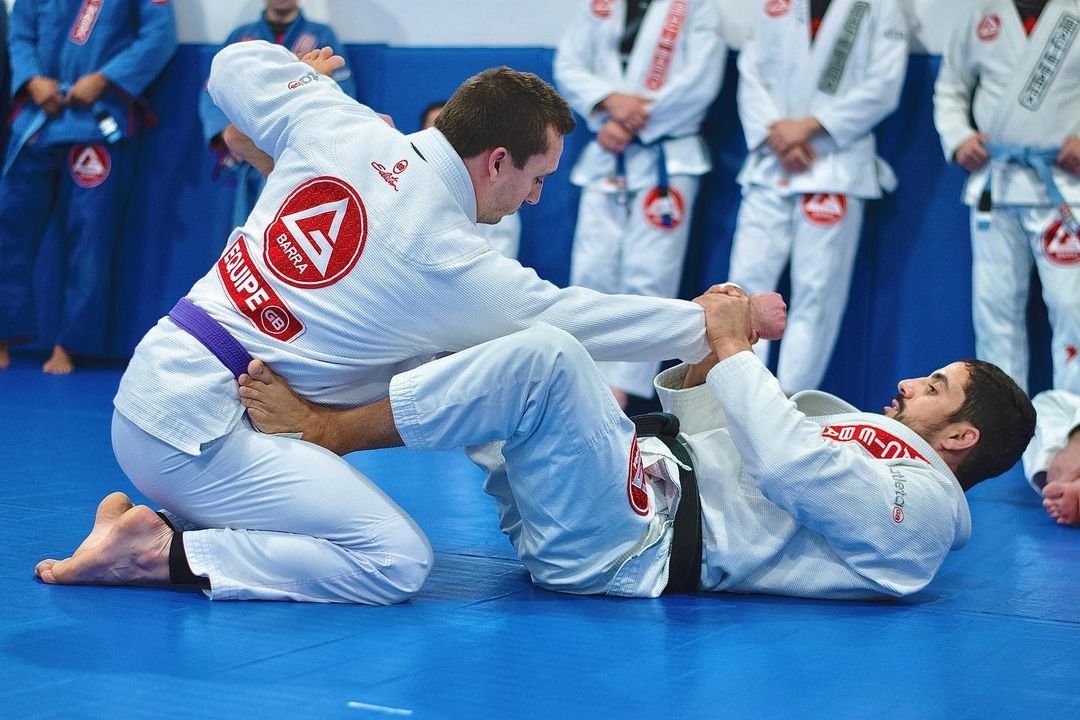
The next class is where a remembered idea can meet real feedback. When an instructor introduces a related position, listen for the cue you noted. Then practice the assigned exercise with your partner at the pace set for the class. If something feels different from your memory, pause and ask rather than improvising a correction. This keeps the focus on learning the lesson as taught.
Practice with a partner also gives you a second view of the same exercise. Your partner may remember a cue you missed; you may notice when they need space or a slower repetition. Work cooperatively and follow your instructor’s direction. The purpose is to understand the exercise together, not to prove who remembered more or to turn a drill into a contest.
Ask for the next useful detail
Instead of asking someone to repeat an entire demonstration, identify the point where you lost track: “I remember the start, but what should I notice when my partner changes position?” A specific question lets the instructor respond to the gap you actually have. It can also help you remember Jiu-Jitsu techniques by attaching the explanation to a familiar situation.
If the lesson does not return immediately, that is fine. Keep the cue in your notes until a suitable class brings it back. Our program overview shows how our classes fit into a structured path. Learning is built across sessions; there is no need to force a technique into a moment that does not call for it.
A small routine to remember Jiu-Jitsu techniques
To remember Jiu-Jitsu techniques, try a simple sequence: recall one point after class, write one cue and one question, then revisit that point when your instructor returns to it. These are three distinct jobs. Recall tells you what stayed with you. Notes preserve the question. Guided practice lets you check your understanding in the right setting.
Some weeks, you may remember only the broad goal of a lesson. Other weeks, a particular cue may stand out. Neither is a verdict on your progress. What matters is that you can bring a useful observation back to class. Over time, familiar positions and explanations have more chances to connect.
LEARN WITH Gracie Barra Headquarters Irvine
CONTACT USBring your question to the mats
Remembering a lesson is a process, not a demand to get every detail right the first time. At Gracie Barra Headquarters Irvine, we welcome questions that help students participate in the exercise in front of them. If a detail remains unclear, let us know so we can guide you through it in class.
Want to begin or return to training in Irvine? Contact us to try a class and meet our team. Bring your curiosity, practice with care, and give each lesson a chance to become more familiar.